As an Amazon Associate this site earns from qualifying purchases.
Specifications at a glance
| Product | Price | Dimensions | Material | Type | Litter compatibility |
|---|---|---|---|---|---|
| Arm & Hammer Rimmed Cat Litter Box with High Sides and Microban, Made in USA | Check price on Amazon | 18.7" x 15.5" x 10.6" | Recycled materials | Open, high-sided, rimmed for liners | Pine, crystal, clumping |
| Petmate Basic Open Cat Litter Pan | Check price on Amazon | 14" x 10.5" x 3.5" | Plastic | Open pan, low sides | Not stated |
| Arm & Hammer Large Sifting Litter Box | Check price on Amazon | Not stated ("large") | Recycled materials | Sifting tray set | Pine, crystal, pellets, clumping |
| Idymere Stainless Steel High Sided Cat Litter Box | Check price on Amazon | 16.93" x 12.99" x 5.12" | Stainless steel | Open, high-sided | Not stated |
| OneBug Stainless Steel XL Cat Litter Box | Check price on Amazon | 22.95" x 14.80" x 10.04" | Stainless steel | Open, high-sided, scoop included | Not stated |
| Cumrige Self Cleaning Litter Box | Check price on Amazon | Not stated (95 L drum, 15 L waste bin) | Not stated | Automatic, app-controlled | Clumping |
Quick answer: Choosing a litter box comes down to three numbers and one habit — the box's length (aim for roughly 1.5 times your cat's body length, nose to tail base), the wall height (higher walls contain kicked litter and high-spraying urine), and the entry height (low sides matter for kittens and arthritic seniors). Then match the material and cleaning system to how often you're realistically willing to scoop. A plain open pan that gets scooped daily beats a clever box that gets neglected.
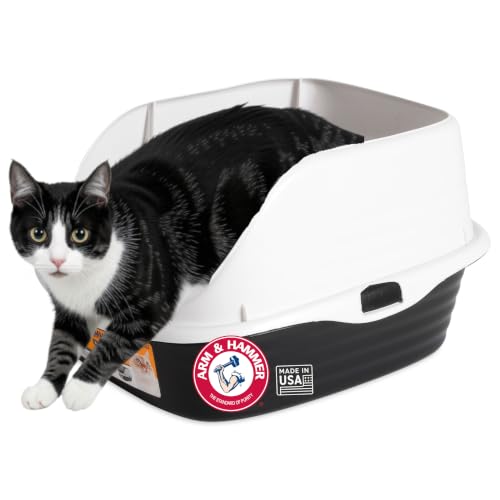
- LESS MESS, CLEANER AREA: The high sided litter box design helps secure liners and reduces spills, keeping the area around your litter box cleaner and more organized
- ODOR PROTECTION: This cat litter box features built-in smell protection to combat odors; replace cat litter boxes every 12 months to keep freshness
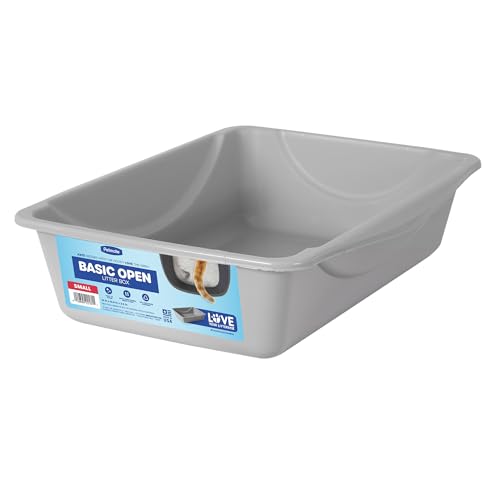
- OPEN-TOP KITTY LITTER BOX: This small cat litter pan provides ample space on all sides for cats to do their business comfortably, and is great for small cats or kittens to access
- KEEPS LITTER CONTAINED: This small cat litter box features a wide base to keep mess contained within the pan for litter-free floors It features a rim on all sides to easily lift
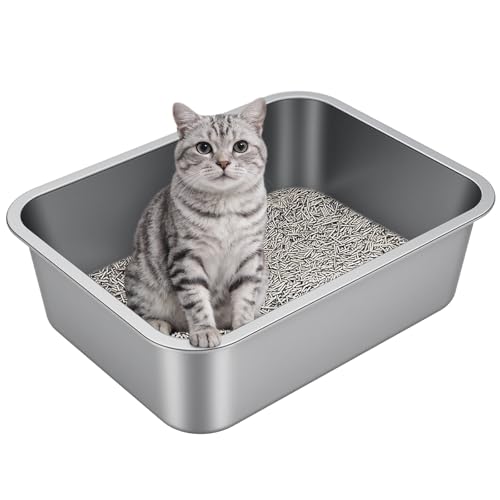
- Large Capacity: The Idymere stainless steel litter box measures 16.93"L x 12.99"W x 5.12"H, offering ample space for kitty, kittens, elderly cats or medium cats to do their
- Strong and Sturdy: Made of high-quality stainless steel, this litter box resists corrosion, wear, and rust. Unlike plastic litter boxes, it does not trap residue or odors, helping
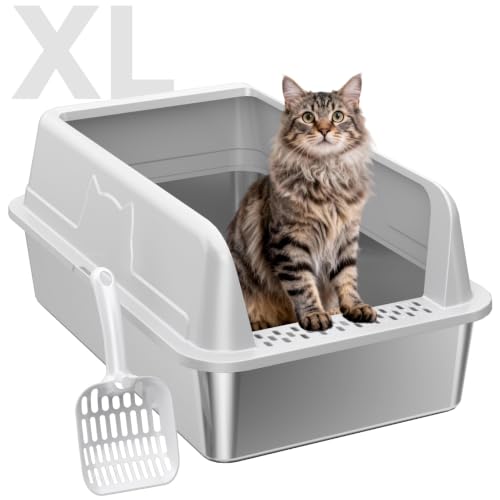
- Space:This spacious stainless steel litter box measures 22.95" L x 14.80" W x 10.04" H, offering ample room for cats or multi-cat homes. Ideal for cats for turning, digging, and
- High-Sided Design:The 10.04" tall walls help prevent litter scatter and urine spills, keeping floors clean. A built-in anti-tracking step reduces mess, while the high sides create
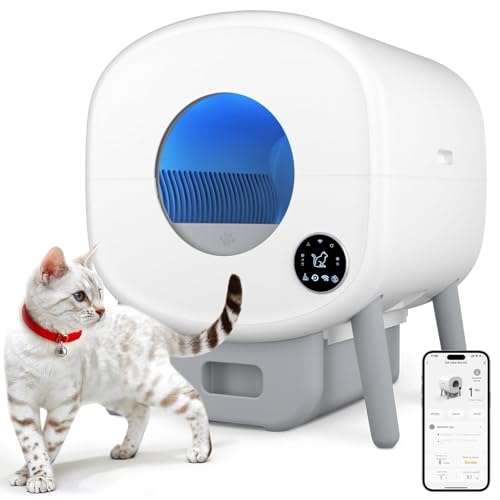
- Cat Safety Priority: Cumrige automatic litter box uses advanced sensors to detect your cat's presence, pausing cleaning cycles for their safety. This ensures your feline friend
- Large Drum Capacity: The automatic cat litter box features a 95 L roller capacity for cats 2.2 to 33 lbs. Its 15 L waste bin lasts up to 15 days, making it ideal for long trips
The default starting point
If you want one box that covers most adult cats without overthinking it, the Arm & Hammer Rimmed Cat Litter Box with High Sides and Microban, Made in USA is the shape most households need: 18.7" x 15.5" with 10.6" walls, made from recycled materials, with built-in Microban odor protection and a rim designed to hold liners in place. It takes pine, crystal, or clumping litter, so you're not locked into one aisle of the pet store. Arm & Hammer suggests replacing plastic boxes every 12 months to keep them fresh — worth budgeting for, since porous plastic eventually holds smell no matter how well you scoop.
Who it's for
- Households with one or two average-sized adult cats who need a box that's long enough to turn around in.
- Cats who kick litter enthusiastically or stand up to urinate — 10.6" walls catch a lot of what a shallow pan wouldn't.
- People who use liners and are tired of the liner sliding into the litter.
- Anyone who switches litter types seasonally or by price, since it takes several kinds.
Who should skip it
- Kitten owners and people with arthritic or three-legged seniors. Ten-inch walls are a real climb; a low-entry pan is kinder and prevents accidents right beside the box.
- Anyone who hates plastic on principle or has had recurring odor problems in plastic boxes. Stainless steel doesn't absorb anything.
- Owners of very large cats (Maine Coons, big Ragdolls) who need more than 18.7" of length.
- People shopping specifically to stop scooping. This is a manual box, full stop.
The honest trade-offs
High sides vs. easy entry. These pull in opposite directions and there's no perfect middle. Tall walls solve litter scatter; low walls solve accessibility. If you have both a kitten and an adult cat, buy two different boxes rather than one compromise box.
The best litter box buying guide for your situation depends on how you plan to use it and where.
Plastic vs. stainless steel. Plastic is cheap and light, and it's what most liners and hoods are designed around. But scratches from claws create micro-grooves that trap urine, which is why manufacturers recommend annual replacement. Stainless steel is non-porous, doesn't stain, and lasts effectively forever — but it's colder to the touch, noisier when litter hits it, and costs more up front.
Sifting vs. scooping. A sifting tray removes the scoop from the equation by lifting clumps out through a grid. It works genuinely well with pellets and crystal litter. With fine clumping litter, sifting can be fussier than a scoop, because damp clumps stick to the grid.
Automatic vs. manual. An automatic box removes the daily chore and adds moving parts, a power cord, a Wi-Fi dependency, and a price roughly ten times a good manual box. It also hides one of the earliest health signals you get — noticing that urine clumps have suddenly doubled in size is how a lot of people catch diabetes or kidney disease early. App-based health tracking can partly replace that, but only if you actually read it.
Size is the mistake most people make. Nearly every "my cat pees over the edge" or "my cat goes beside the box" problem traces back to a box that's too small. Measure your cat, then multiply by 1.5. Buy for the cat you have, not the shelf space you'd prefer.
What to check on the listing before you buy
Listings change constantly, so verify these yourself rather than trusting any article, including this one:
- Current price. Every price here is a snapshot. Litter boxes go on and off promotion frequently.
- The variant you're actually adding to cart. Several of these come in multiple sizes and colors, and the size selector resets the price and dimensions. The Petmate pan and the Idymere steel box both list multiple sizes — confirm the dimensions shown match the ones you want.
- Whether accessories are included. The OneBug listing states a scoop is included; others don't mention one. Don't assume.
- Warranty and return window, particularly on the automatic box. A $199.95 appliance with motors and sensors deserves a look at the return policy before checkout.
- Power and connectivity requirements. The Cumrige is 2.4 GHz Wi-Fi only — if your router broadcasts a merged 2.4/5 GHz network, expect a setup detour.
- Reviews and recent questions. Read them yourself, sort by most recent, and look for complaints about the specific size you're buying.
Alternatives worth considering
Petmate Basic Open Cat Litter Pan, Multidirectional Easy to Clean Plastic Litter Box, Gray, Made in USA, 14" x 10.5" x 3.5", Small Recommended for Kittens and Small Cats — consider instead if…
You have a kitten, a small adult cat, or a senior who can't step over a wall. At 14" x 10.5" x 3.5" with a wide base and a lift rim on all sides, the Petmate Basic Open Cat Litter Pan is a genuinely low-entry pan at $4.99 — cheap enough to buy several and place one on each floor of the house, which is exactly what you want during litter training. It won't contain scatter from an enthusiastic digger, and it will outgrow a growing cat within months. Treat it as a starter or supplementary box.
Arm & Hammer Large Sifting Litter Box Scoop Free Cat Litter Tray with Microban, Made in USA — consider instead if…
You use pine pellets or crystal litter and want cleanup without a scoop. The Arm & Hammer Large Sifting Litter Box uses a lift-to-sift tray system, is made in the USA from recycled materials, includes Microban odor protection, and takes pine, crystal, pellets, or clumping litter. At $19.99 it's a small premium over a plain box. The catch: the listing doesn't state exact dimensions beyond "large," so measure your space and your cat before committing.
Idymere Stainless Steel High Sided Cat Litter Box — consider instead if…
You want metal without the XL footprint or price. The Idymere Stainless Steel High Sided Cat Litter Box is 16.93" x 12.99" x 5.12" — a moderate 5" wall that's high enough to hold litter in but low enough for kittens, elderly cats, and medium adults to step over. Stainless resists rust and corrosion, doesn't trap residue the way scratched plastic does, and dries fast. At $18.99 it's priced against plastic while lasting far longer. If you have a high-spraying cat, though, 5" of wall won't be enough.
OneBug Stainless Steel XL Cat Litter Box, High Sides, Non Stick Pan with Scoop — consider instead if…
You have a big cat, several cats, or a determined digger. The OneBug Stainless Steel XL Cat Litter Box is 22.95" x 14.80" x 10.04" — nearly two feet long with 10" walls, an anti-tracking step, clips that lock the walls to the base so they don't wobble under a serious dig, non-slip pads, and an included scoop. At $31.49 it's the priciest manual option here, and the footprint is real: measure the corner you're putting it in first.
Cumrige Self Cleaning Litter Box, Large Capacity Automatic Cat Litter Box Self Cleaning for Cats, App Control, Safety Protection, 2 Roll Garbage Bags, White & Grey — consider instead if…
Daily scooping is the thing standing between you and a happy household, or you travel often. The Cumrige Self Cleaning Litter Box has a 95 L drum rated for cats from 2.2 to 33 lbs, a 15 L waste bin the maker says lasts up to 15 days, presence sensors that pause the cycle when a cat enters, and Tuya app control for remote cleaning and health tracking. It runs on clumping litter and 2.4 GHz Wi-Fi only. At $199.95 it's a different category of purchase — and cats who are nervous about noise or enclosed spaces may need a slow introduction alongside their old box.
FAQ
How many litter boxes do I actually need? The standard veterinary guidance is one box per cat plus one spare, spread across different rooms and floors rather than lined up in the same corner. Two cats, three boxes. This is why a $4.99 pan is worth knowing about — the extras don't all have to be the nice one.
Covered or uncovered? Uncovered is the safer default. Hoods trap odor inside where the cat has to smell it, and some cats avoid a box they can't see out of. If litter scatter is the problem you're solving, high sides handle it without the enclosure — that's what the 10.6" walls on the Arm & Hammer rimmed box and the 10.04" walls on the OneBug are for.
Is stainless steel worth the extra money? It depends on your time horizon. Plastic boxes get scratched, and manufacturers recommend replacing them roughly yearly; steel doesn't absorb urine or stain, so it doesn't have that clock on it. Over several years the steel box is likely cheaper. Over six months, it isn't.
Will an automatic box let me stop paying attention? No — and you shouldn't want it to. Changes in urine volume, frequency, and stool consistency are among the earliest signs of illness in cats. If you go automatic, use the app's tracking deliberately rather than treating the box as a solved problem.
Related guides
- Best dog and cat supplies - dog crates, cat trees, dog beds, litter boxes, pet kennels and cat condos for Seniors
- Top 10 Tips for Best dog and cat supplies - dog crates, cat trees, dog beds, litter boxes, pet kennels and cat condos
- How to Succeed with Best dog and cat supplies - dog crates, cat trees, dog beds, litter boxes, pet kennels and cat condos
Key Takeaways
- Choosing the right litter box buying guide means matching the key features to your specific needs and budget
- Read real customer reviews and check the return policy before you commit
- Compare value across models — the priciest option is not always the best fit