As an Amazon Associate this site earns from qualifying purchases.
Comparison table
| Product | Price | Exterior / stated size | Type | Wheels | Airline claim |
|---|---|---|---|---|---|
| SportPet Airline Compliant LARGE 31.5" Travel Dog Kennel | Check price on Amazon | 31.5" (interior 28.75"L x 19.75"W x 21.5"H) | Hard plastic, collapsible into two pieces | Yes, removable | IATA 51st Edition compliant |
| Petmate Vari Dog Kennel | Check price on Amazon | 36" (interior 32.5"L x 22.2"W x 26"H) | Hard plastic | Not stated | Meets most airline cargo specs |
| Amazon Basics Portable Folding Soft Dog Crate | Check price on Amazon | 29.92"L x 21.3"W x 21.3"H | Soft-sided polyester, folds flat | Not stated | None stated |
| XVISHX Dog Crate, 36x25x25 Inch | Check price on Amazon | 36" x 25" x 25" | Soft-sided 620D Oxford, folds flat | Not stated | None stated |
| Gardner Pet Collapsible Dog Crate | Check price on Amazon | 36.4"L x 22.84"W x 25.8"H | PE plastic + metal wire, folds flat | Yes, 2 | None stated |
| ZOMISIA Collapsible Dog Crate 28" L | Check price on Amazon | 27.95"L x 18.9"W x 21.65"H | Hard plastic + metal wire, folds flat | Yes, 2 | None stated |
Quick answer: If you're flying, get a hard-sided kennel that meets airline rules — the SportPet Airline Compliant LARGE 31.5" Travel Dog Kennel is the cheapest IATA-compliant option here at $78, and the Petmate Vari Dog Kennel is the sturdier, more expensive alternative. If you're driving to a hotel or a relative's house and your dog already crates calmly, a soft-sided folding crate like the Amazon Basics Portable Folding Soft Dog Crate weighs less and packs flatter. And if "travel" mostly means moving the crate between rooms, the car trunk, and the patio, a wheeled collapsible plastic crate is the better buy.
The word "travel" is doing a lot of work in this category, and that's where most people buy the wrong thing. A crate that's perfect for a road trip may be flatly rejected at an airline cargo counter. A crate that satisfies an airline is a heavy plastic box you'll hate carrying up stairs. Sort out which trip you're actually taking first, then pick from the six below.
SportPet Airline Compliant LARGE 31.5" Travel Dog Kennel — Best Overall
The SportPet Airline Compliant LARGE 31.5" Travel Dog Kennel is the pick because it's the only crate here that states compliance with a specific published standard: the 51st Edition of the IATA Live Animal Regulations. That matters. "Airline approved" is a marketing phrase anyone can print on a box; citing the edition of the regulation is a checkable claim you can take to an airline's pet desk.
The best best travel dog crates for your situation depends on how you plan to use it and where.
It ships with the things airlines actually ask for and that people forget until they're at the counter: tie-down holes for securing the door, four "Live Animal" labels, reinforced metal hardware, and two food and water dishes that attach inside. There's a hard plastic shell, built-in ventilation and visibility, and an accident moat that pulls spills away from your dog's body — useful on a long flight or a delayed connection.
The wheels snap on and off, which is the detail that makes airport terminals survivable, and there's a top carry handle for the moments you have to lift it. It also separates into two pieces for storage, so it isn't occupying a whole closet corner for the eleven months a year you're not flying.
Sizing: it's built for pets up to 28" long and 20" tall, with interior dimensions of 28.75"L x 19.75"W x 21.5"H. Measure your dog standing before you order — airlines care that the animal can stand, turn, and lie down naturally, and a crate that's slightly too small is a wasted trip to the airport. At $78 it's the best value on this list for anyone who flies even occasionally.
Petmate Vari Dog Kennel — Best for Large Dogs Flying Cargo
The Petmate Vari Dog Kennel is the 36-inch, heavier-duty answer for dogs in the 50–70 lb range. Interior dimensions run 32.5"L x 22.2"W x 26" H, which is meaningfully taller than the SportPet — a real consideration for a leggy dog who needs headroom to stand without ducking.
It's built around a sturdy wire door, four-sided ventilation, and tamper-proof holes for zip ties. Petmate describes it as meeting most airline cargo specifications rather than naming a specific IATA edition, so if you're flying, call your carrier with the model and dimensions before you commit — airline pet policies differ more than anyone expects and change without much notice.
The plastic shell wipes down fast and there's a stay-dry moat that directs fluids away from your pet, which Petmate also pitches for housebreaking puppies at home. That's a fair second life for the crate between trips.
At $150.95 it's the most expensive option here, and it doesn't fold or collapse. You're paying for a rigid shell sized for a big dog, not for convenience.
Amazon Basics Portable Folding Soft Dog Crate — Best for Lightweight Road Trips
The Amazon Basics Portable Folding Soft Dog Crate is the one to grab if your travel is car-based and your dog is already comfortable settling in a crate. It's a polyester soft-sided crate on a lightweight frame, 29.92"L x 21.3"W x 21.3"H, and Amazon recommends it for medium breeds around 50 lbs — Blue Heelers and Golden Retrievers are the examples given.
Two doors, top and front, which is more useful than it sounds: the top door lets you lower a reluctant dog in rather than trying to coax them through a front opening in a hotel room at 11pm. Zipper closures secure both, and fastening straps hold the rolled-up doors out of the way. Mesh windows and a mesh front give ventilation on all four sides.
It sets up in seconds with no tools and folds flat, so it slides behind a car seat or into a closet. At $52.47 it's the least expensive crate on this list.
The honest caveat: soft-sided means a determined chewer or an anxious escape artist can get through fabric and zippers. This is a crate for a dog who likes their crate, not one who's fighting it. It is also not an air travel crate.
XVISHX Dog Crate, 36x25x25 Inch Large Dog Crate — Best Roomy Soft Crate
The XVISHX Dog Crate,36x25x25 Inch Large Dog Crate for Large or Medium Dogs is the same soft-sided concept scaled up to 36x25x25 inches, which is a genuinely large footprint for a fabric crate — closer to a portable den than a carrier.
XVISHX addresses the usual soft-crate weakness head-on with materials: a thickened steel pipe frame, 620D Oxford fabric, and leather-wrapped corners intended to resist scratching and chewing. Whether that holds up against your specific dog is something only your dog can answer, but the corner reinforcement is the right place to spend, since corners are where paws and teeth go first.
Mesh surrounds the sides and top for airflow, and there are three doors, so you can position the crate against a wall or in a car and still have a workable opening. Assembly takes seconds with no tools, and it folds down small enough for one person to carry.
At $59.99 it's the cheapest way to get a 36-inch travel crate here. Use it for road trips, hotel stays, camping, and home — not for flying.
Gardner Pet Collapsible Dog Crate for Large/Medium Dogs — Best Wheeled Crate for Big Dogs
The Gardner Pet Collapsible Dog Crate for Large/Medium Dogs splits the difference between a hard crate and a folding one. It's 36.4"L x 22.84"W x 25.8"H, built from PE plastic and metal wire, and it folds flat in seconds with no tools.
Two wheels and handles on both sides mean you roll it rather than carry it — the practical difference between loading a crate into an SUV alone and needing a second person. The door uses squeeze-latch locks that Gardner Pet describes as easy for owners but resistant to dogs who've figured out simpler latches. Corners are curved and rounded to eliminate sharp edges and reduce pinch points.
At $134.99 it's near the top of this list on price, and it makes no airline compliance claim, so treat it as a car-and-house crate. What you're buying is the ability to move a large-dog crate around without dreading it, plus a look that doesn't wreck a living room.
ZOMISIA Collapsible Dog Crate for Dogs, 28" L — Best for Small Cars and Apartments
The ZOMISIA Collapsible Dog Crate for Dogs is the smaller sibling of the same idea, at 27.95"L x 18.9"W x 21.65"H, and ZOMISIA specifically notes it fits in most mid-to-large SUV trunks. If your constraint is cargo space rather than dog size, start here.
Construction is reinforced hard plastic plus metal wire, with four steel sides and the same squeeze-latch door locks. It folds flat with no tools and stores against a wall, which is the whole point in an apartment. Two smooth-rolling wheels and handles on both sides handle the repositioning — living room to patio to trunk.
At $89.98 it sits in the middle of this list, and like the Gardner Pet it makes no air travel claim. This is a road trip and home crate.
Weight capacities: the Amazon Basics is recommended for medium breeds around 50 lbs, the Petmate Vari for dogs 50–70 lbs, and the SportPet for pets up to 28"L x 20"H. The XVISHX, Gardner Pet, and ZOMISIA do not state a weight rating.
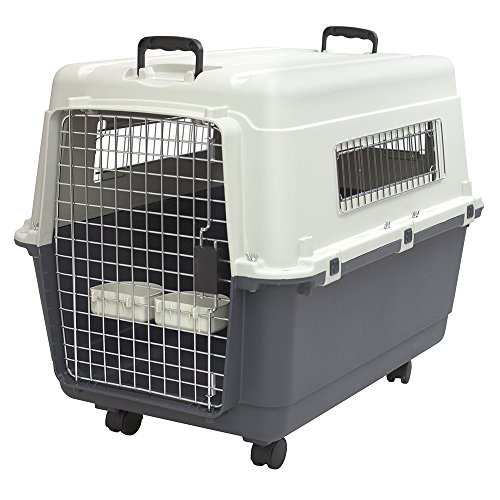
- IATA AIRLINE COMPLIANT TRAVEL CRATE: Compliant with the standards specified in the 51st Edition of the IATA Live Animal Regulation for safe, secure air travel—The Kennel features
- EASY TRANSPORT FOR AIR TRAVEL: Designed for easy airport navigation, with smooth-rolling wheels for effortless airport transport and a built-in top carry handle for quick lifting
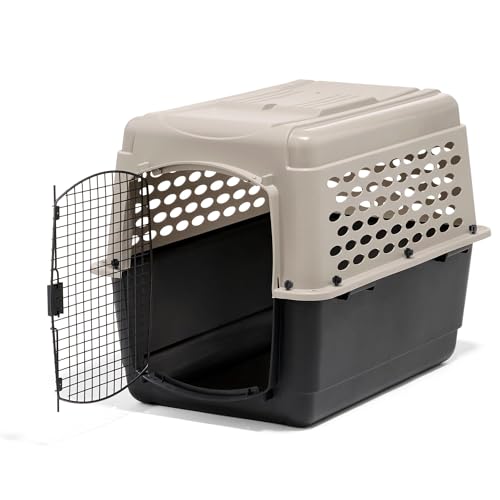
- SECURE AND SAFE: Protect your pet with this plastic dog crate featuring a an easy-open, sturdy wire door and tamper-proof holes for zip ties, so the kennel stays secure—a
- AIRLINE-FRIENDLY: This pet carrier for dogs meets most airline cargo specifications, offering four-sided ventilation for your pet's comfort and visibility during air travel
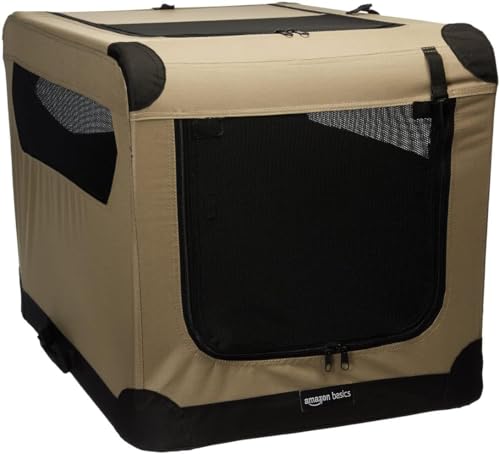
- Soft-sided dog crate for keeping a furry 4-legged friend safe and comfortable when traveling, includes a Small dog crate made of tan polyester fabric and a lightweight yet sturdy
- Sets up in seconds with no tools needed; folds flat for easy portability and compact storage;2 doors (top and front) for easy loading and unloading
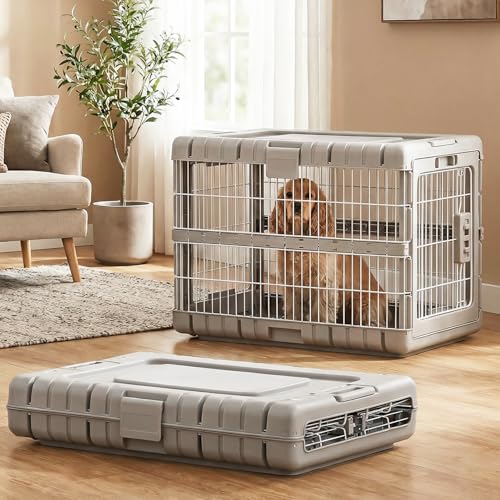
- Space-Saving Foldable Design: This collapsible dog crate features a innovative foldable design, allowing it to be stored flat when not in use. Perfect for small apartments or
- Easy Mobility with Wheels & Handles: Equipped with two smooth-rolling wheels and sturdy handles on both sides, this pet crate offers effortless mobility. Ideal for repositioning
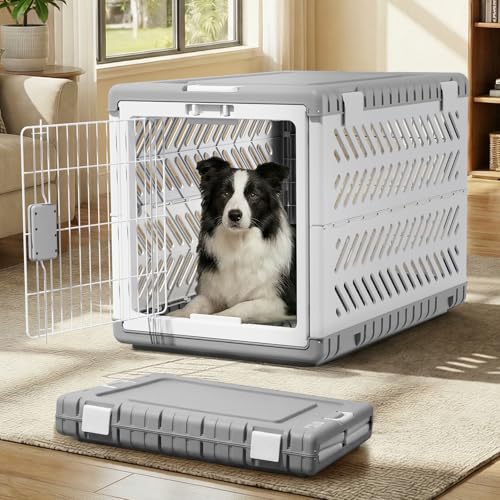
- Easy to Assemble: The one-piece folding dog box furniture eliminates the need for complex assembly. You can create a comfortable haven for your pet set up and fold down the crate
- Space-Saving & Easy Mobility: This collapsible dog crate features a innovative foldable design, allowing it to be stored flat when not in use. Equipped with two smooth-rolling
How to choose
Are you actually flying? This is the only question that eliminates options outright. Airlines require a rigid, hard-sided kennel with tie-down points, four-sided ventilation, and a secure door latch. That rules out both soft crates here, and it also rules out the folding plastic crates, since neither the Gardner Pet nor the ZOMISIA makes an air travel claim. You're choosing between the SportPet and the Petmate Vari — and even then, confirm with your specific carrier before you buy, because policies vary by airline, aircraft, and season.
Measure the dog, not the breed. Get your dog's standing height at the shoulder plus head clearance, and their length from nose to tail base. Compare against interior dimensions, not exterior — the SportPet and Petmate both publish interior numbers, which is why those two are easiest to size confidently.
Measure the car too. The most common regret with a 36-inch crate is discovering it doesn't clear the trunk hatch. ZOMISIA's fit-in-most-SUV-trunks note is the only claim of that kind here; for everything else, take a tape measure to your cargo area first.
Chewers and escape artists change the answer. Fabric is quieter, lighter, and cheaper, but it's fabric. If your dog works at zippers or seams when stressed, skip the soft options and pay for plastic and steel.
Wheels are worth more than they look. A 36-inch hard crate with a dog inside is genuinely awkward to lift. The SportPet, Gardner Pet, and ZOMISIA all have wheels; the Amazon Basics, XVISHX, and Petmate Vari do not state them.
Check the current reviews yourself. Latch durability, wheel quality, and zipper longevity are exactly the things that show up in owner reviews over time and never in a spec sheet. Open the listing and read recent reviews before you buy — especially for the newer models here.
FAQ
Will any of these crates be accepted for airline cargo? The SportPet states compliance with the IATA Live Animal Regulations, 51st Edition, and the Petmate Vari states that it meets most airline cargo specifications. Both include tie-down provisions — zip tie holes on the Petmate, tie-down holes on the SportPet. Neither guarantees acceptance by your particular airline. Call the carrier with the model and dimensions before you book.
Can I use a soft-sided crate in the car? The XVISHX is described as protecting the dog in the car, and both soft crates are designed for travel. But note that a soft crate is a containment space, not a crash-tested restraint — none of these products makes a crash safety claim. Secure the crate so it can't slide, and don't treat any of them as a substitute for a certified safety harness.
Which one is easiest to store between trips? The Amazon Basics and XVISHX fold flat and are the lightest, so they win on pure storage. The Gardner Pet and ZOMISIA also fold flat with no tools and store upright against a wall. The SportPet separates into two nesting pieces. The Petmate Vari does not fold.
What size should I get for a 50 lb dog? The Amazon Basics is explicitly recommended for medium breeds around 50 lbs, and the Petmate Vari covers 50–70 lbs. For the crates that don't state a weight rating — XVISHX, Gardner Pet, ZOMISIA — go by interior dimensions and your dog's measured standing height instead.
Related guides
- Expert Advice on Best dog and cat supplies - dog crates, cat trees, dog beds, litter boxes, pet kennels and cat condos
- Step-by-Step Best dog and cat supplies - dog crates, cat trees, dog beds, litter boxes, pet kennels and cat condos Process
- Best Providers for Best dog and cat supplies - dog crates, cat trees, dog beds, litter boxes, pet kennels and cat condos
Key Takeaways
- Choosing the right best travel dog crates means matching the key features to your specific needs and budget
- Read real customer reviews and check the return policy before you commit
- Compare value across models — the priciest option is not always the best fit