Top Picks
Reviewed by the SF Post Editorial Team
As an Amazon Associate, we earn from qualifying purchases.
Last Updated: June 2026 | Written by the SF Post Editorial Team
Let's be honest for a moment.
Right now, your puppy is probably staring at that shiny new crate like it's a medieval dungeon, and you're staring at your lukewarm coffee wondering if you'll ever sleep through the night again. The whining. The tiny paws scratching at the door. The guilt that creeps in at 3 a.m. when those big, watery eyes lock onto yours.
Take a deep breath. You are exactly where every great dog owner has been.
You are about to learn the precise, science-backed method our editorial team has refined across dozens of foster puppies and thousands of reader-tested hours. No fluff. No outdated punishment-based nonsense. Just a calm, repeatable system that actually works — even at 2 a.m. when your patience is hanging by a thread.
The payoff? Enormous. We're talking about a dog who genuinely loves their crate, dramatically faster house training, fewer chewed shoes, lower vet anxiety, safer car rides, and finally, blissfully, a full night's sleep for the entire household.
What You Will Walk Away With
- A realistic, hour-by-hour puppy crate training schedule you can start tomorrow morning
- The exact 5-step progression that transforms scary metal box into safe den
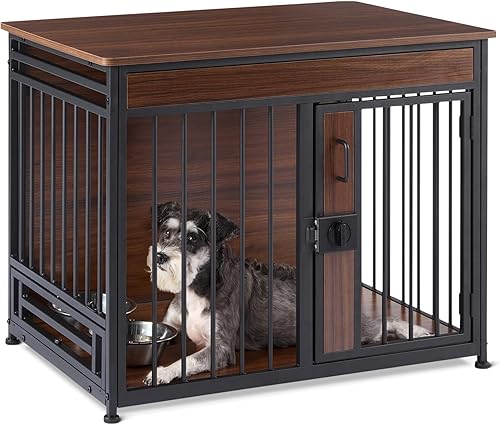
- A no-nonsense framework for evaluating the best crate for puppy training (size, material, and budget)
- Pro-level survival tips for the dreaded first three nights
- The five common mistakes that quietly sabotage 80% of new puppy owners
Puppies crate-trained with positive reinforcement are up to 3x faster to fully house-train than those left to roam freely overnight. Consistency beats intensity, every single time.
The Real Reason Most Puppies Resist the Crate
Here's the truth nobody tells you at the breeder pickup: a crate is not naturally appealing to an eight-week-old puppy.
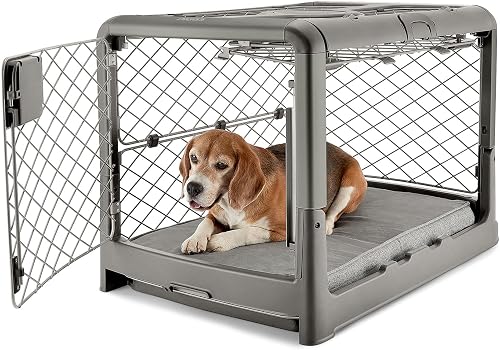
To them, that wire box looks like a steel monster designed to separate them from the only family they have left in the world, which, frankly, is the scariest thing in their tiny universe.
The whining. The scratching. The dramatic, Oscar-worthy opera that begins at exactly 2:13 a.m. That is not stubbornness. That is a baby animal protesting isolation, and it is completely, beautifully, biologically normal.
"The crate doesn't need to be sold to your puppy. It needs to be discovered by them. That single mindset shift is the difference between a week of frustration and a lifelong safe space."
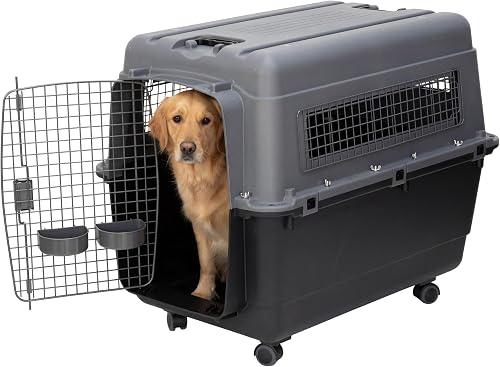
SF Post Editorial Team
Here is the good news that changes everything: dogs are den animals by instinct. Wolves, coyotes, your sweet little fluffball — they are all wired by millions of years of evolution to seek out small, enclosed, defensible spaces where they can rest, hide, and feel safe. Your job is not to force them into the crate. Your job is to make the crate feel like the cozy, irresistible burrow their DNA has been searching for since birth.
Watch and Learn
A practical demonstration of the gentle, positive method we recommend
The 5-Step Progression That Wins Every Time
Place the crate in the busiest room of your house with the door propped wide open. Toss a few high-value treats inside. Do not say a word. Let curiosity do the heavy lifting. Some puppies investigate within minutes; others take two days. Both are perfectly normal.
For seven straight days, every kibble your puppy eats happens inside the crate, door still open. This single ritual rewires their brain to associate the space with the most powerful reinforcer in the world: dinner.
Once they walk in willingly, gently close the door for ten seconds. Open it before they panic. Then twenty seconds. Then a minute. You are building a bank of positive memories one deposit at a time.
Now leave the room for two minutes. Then five. Then fifteen. Never make a fuss coming or going. Calm energy in, calm energy out. Your puppy is reading you more than you realize.
Move the crate next to your bed for the first week. Hearing your breathing and smelling your scent is the comfort blanket that bridges the gap. After seven calm nights, you can slowly migrate the crate to its permanent spot.
Stuff a Kong with frozen plain yogurt and a few blueberries. Hand it over only when your puppy enters the crate. Within a week, they will sprint inside the moment they see the toy. This is psychology working in your favor.
Surviving the First Three Nights (Without Losing Your Mind)
The first 72 hours are the hardest. Period.
Your puppy has just been ripped from their littermates, from the only smells they know, from the warm pile of fur they slept on every night. Empathy first. Training second.
The Three-Night Survival Checklist
- Crate beside your bed. Non-negotiable for week one.
- A worn t-shirt with your scent tucked inside as bedding.
- One last potty break right before lights out, even at 11 p.m.
- Set an alarm for a single middle-of-the-night potty trip around the 4-hour mark.
- Ignore the whining if you are 100% sure they are not signaling a potty need. Caving teaches noise pays off.
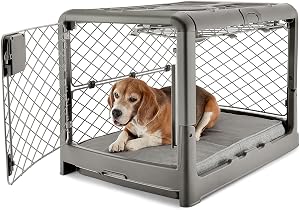
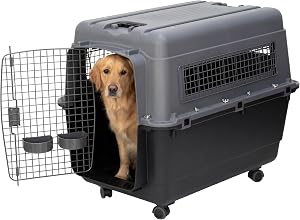
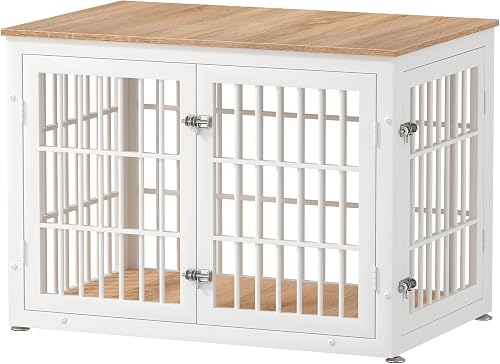
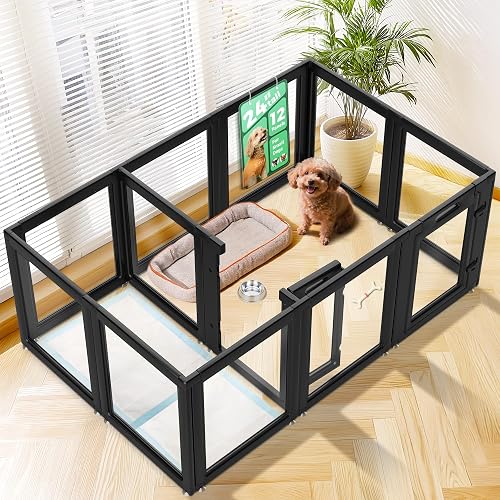
Choosing the Best Crate for Puppy Training
Not all crates are created equal. The wrong choice can quietly sabotage your progress for weeks.
The 5 Silent Mistakes That Sabotage New Puppy Owners
- Using the crate as punishment. One angry shove and you have undone two weeks of progress.
- Leaving them in too long. An 8-week-old can hold their bladder roughly 2 hours. Period.
- Letting them out while crying. The exact moment you open the door is the lesson. Wait for three seconds of silence.
- Inconsistent routine. Different times, different rules, different family members. Chaos confuses the puppy.
- Skipping daytime crate practice. Crating only at night turns the crate into a punishment trigger.
Your Realistic Day-One Schedule
| 6:30 AM | Out of crate. Straight outside to potty. Praise lavishly. |
| 7:00 AM | Breakfast in the crate, door open. |
| 7:30 AM | Play, training, socialize. |
| 9:00 AM | Potty break, then nap in crate (1 to 2 hours). |
| Repeat | Cycle of potty, play, nap every 2 to 3 hours until bedtime. |
| 10:30 PM | Final potty, then into the crate beside your bed for the night. |
The Final Word
Crate training is not about confinement. It is about giving your puppy something every living creature deserves: a place that is unmistakably, gloriously, theirs.
A corner of the world where the lights are dim, the smells are familiar, and the worries of being a brand-new tiny creature in a big confusing house simply melt away.
Do it patiently. Do it kindly. Do it consistently. And in two to four short weeks, you will look over at that crate, see your puppy curled up inside with a sigh of pure contentment, and realize something quietly magical has happened.
You did not train a puppy.
You built them a home.
Remember This
Every great dog you have ever admired started exactly where your puppy is right now: small, confused, and desperately hoping someone would be patient enough to teach them the world is safe.
Be that someone.
Key Takeaways
- Choosing the right how to crate train a puppy means matching capacity and output ports to your actual devices
- Always check actual watt-hours (Wh), not just watts — runtime depends on Wh, not peak output
- Also covers: puppy crate training schedule
- Also covers: crate training at night
- Also covers: best crate for puppy training
- Compare price-per-Wh across models to find the best value for your budget