What goes wrong
| Failure | Symptom | Fix |
|---|---|---|
| Washed the foam core | Bed stays heavy and damp for days, smells musty in a week | Don't. If already done, compress with towels, run a fan on it for 48+ hours. Replacement foam is often cheaper than the smell. |
| Skipped enzyme pre-treat | Urine smell returns on hot or humid days | Rewash with enzyme cleaner, let it dwell 15 minutes before the cycle |
| Hot wash or hot dryer | Cover won't stretch back over the foam | Nothing reverses shrinkage. Cold and low from now on |
| Fabric softener on a waterproof cover | Liquids soak through where they used to bead | Rewash with plain detergent, no softener, a few cycles to strip residue |
| Didn't vacuum first | Grey fuzz mats across the fabric, washer drains slowly | Lint brush plus a rubber glove dragged across dry fabric |
| Reassembled while damp | Mildew spots, sour smell within days | Full teardown, fan-dry every layer separately |
| Bed edges soaked | Waterproofing didn't help — sides leak | Many covers waterproof only the sleeping surface. The EHEYCIGA cover notes the sides are not waterproof. Add a washable topper for leak-prone dogs |
Quick answer: Strip and machine wash the cover in cold water on a delicate cycle, vacuum the foam core instead of soaking it, and let everything dry fully before reassembly. Foam inserts almost never go in the washer or dryer — nearly every orthopedic bed on the market says so in its own care label, including the EHEYCIGA and Patas Lague beds below. Budget a full day for drying, because a damp foam core is how beds start smelling worse after a wash than before.
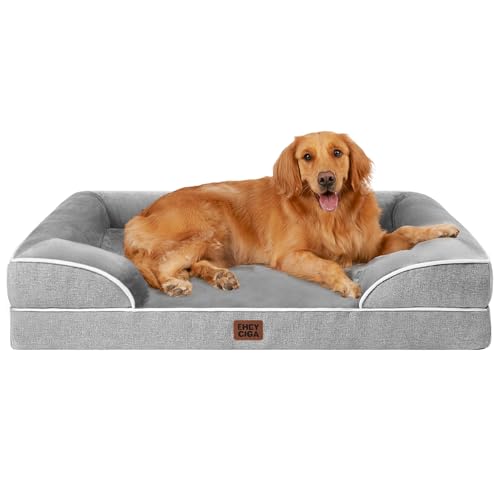
- Polyurethane Foam: The EHEYCIGA orthopedic dog bed features memory foam and egg crate foam to provide even support and pressure relief. It offers a good balance of softness and
- SOFA BED DESIGN: This bolster dog bed is designed with 3-sided bolsters to offer additional support for your pet’s neck and head, promoting restful sleep. The surrounding sides
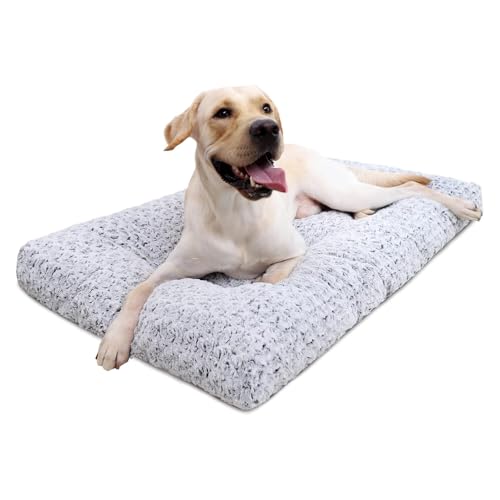
- Luxurious Padding Support - Filled with 3-1/2" premium polypropylene fiber through 6 keyhole fixation, excellent elasticity supporting and long-lasting recovery ability
- Ultra Soft Rose Velvet - Adopt heavy weight deluxe plush material make it super soft, cozy and not easy to shedding, full stuffing to ensure your little furry friend surrounded by
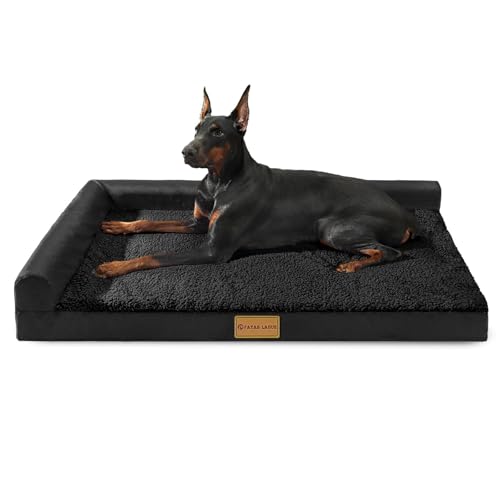
- Orthopedic Dog Bed for All Life Stages: Designed to provide pressure and pain relief for dogs with arthritis, joint pain, hip dysplasia, or mobility issues, this supportive dog
- 2-Sided Bolsters: Designed with supportive 2-sided bolsters, this dog sofa bed gently cradles your dog's neck and head, creating a comfortable resting position from multiple
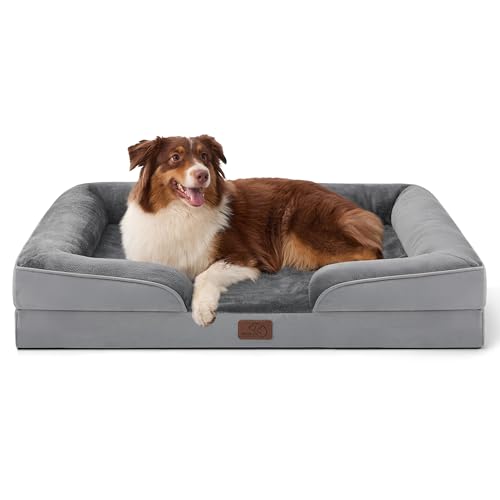
- Orthopedic Support: Our orthopedic dog sofa is designed to give your pet unparalleled support for a deep, dreamy sleep. High-density egg-crate foam helps distribute weight evenly
- Enhanced Comfort: The 4-sided bolster design promotes ultimate comfort and security, offering your pet a variety of cozy positions to snuggle. The cushioned bolster shape is
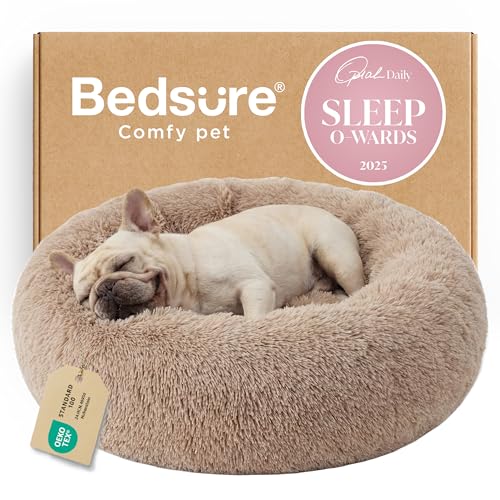
- Oprah Daily Award-Winning Comfort:Recognized by Oprah Daily as the perfect donut dog bed for curl-up sleepers, this round calming pet bed is loved for its extra-fluffy faux fur
- Donut Design for Calming Rest:The signature donut dog bed shape provides a soothing, secure space for pets, while the raised edge supports the head and neck. Its plush filling
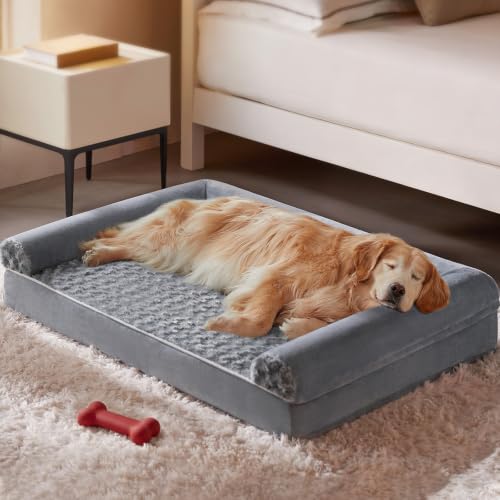
- MADE FOR COMFORT:High density egg crate foam orthopedic dog bed supports your fur baby's muscles and joints, relieves joint pain, a great choice for elderly or sick dog pets. they
- COZY ROSE PATTERN PLUSH: The sleeping surface of the large size dog bed features luxurious rose pattern plush, soft and cozy plush provides a calming and anti-anxiety feel
Before you start: find out what you actually own
Dog beds fall into two cleaning categories, and treating one like the other is what ruins them.
Type A — removable cover over a solid foam slab. Anything described as "orthopedic," "egg crate foam," or "memory foam." The cover washes. The foam does not.
The best how to clean a dog bed for your situation depends on how you plan to use it and where.
Type B — one-piece stuffed bed. Crate pads and donut beds filled with fiber or shredded fill. These often go in the machine whole, if the size allows.
Check the zipper. If there's a zip along one or more sides, you have Type A. If there's no zipper and the whole thing squishes evenly, you likely have Type B. When in doubt, the sewn-in tag wins over anything you read online.
The step-by-step
1. Vacuum first, always. Hit the bed with an upholstery attachment before any water touches it. Hair plus water equals felted mats that never come out. Go along the seams and under the bolsters where hair packs in. Gotcha: Skipping this is the single most common mistake. Wet hair also clogs your washer's drain pump.
2. Unzip and pull the cover off. On beds with multiple zippers, like the three-side zip on the BFPETHOME Orthopedic Washable Large Dog Bed for Senior Dog Comfy Sleep, open all of them before wrestling the foam out. Forcing a partly-unzipped cover is how zipper teeth pop. Gotcha: Take a photo of how the foam sits inside before you remove it. Bolstered covers have a specific orientation and you will forget.
3. Pre-treat stains and pee spots. Use an enzyme cleaner, not a general-purpose spray. Enzymes break down the uric acid that makes urine smell come back on humid days; detergent alone just masks it. Let it dwell for 10–15 minutes. Gotcha: Don't use bleach. The EHEYCIGA care instructions specifically say do not bleach, and bleach reacting with urine ammonia makes the smell worse anyway.
4. Wash the cover cold, gentle, alone. Cold water on a delicate cycle is the instruction printed on the EHEYCIGA cover, and it's the safe default for any laminated or waterproof cover. Wash it by itself — a bed cover is bulky and needs room to move. Gotcha: No fabric softener. It coats the fibers and degrades water-repellency on covers that have a laminated waterproof layer, like the Bedsure Orthopedic Dog Beds Large Sized Dog with Removable Washable Cover.
5. Deal with the foam separately. Vacuum both faces. For spots, blot with a barely-damp cloth and a little enzyme cleaner, then blot dry with towels. Press, don't scrub — scrubbing tears the cell structure of egg crate foam. Gotcha: Do not submerge it. The EHEYCIGA instructions say do not machine wash or dry the foam core; the Patas Lague Orthopedic Large Dog Bed Pet Sofa Beds 36''X24'' Black states the egg crate foam is not washable. Waterlogged foam takes days to dry and grows mildew in the middle where you can't see it.
6. Dry low, or don't dry at all. Tumble dry low is the EHEYCIGA instruction; the Patas Lague cover is listed as machine wash and tumble dry. High heat shrinks covers just enough that they no longer fit over the foam, and it can delaminate waterproof films. Gotcha: Air-dry the foam with a fan pointed at it, on its edge so air hits both faces. Give it a full 24 hours before you call it dry.
7. Reassemble and reshape. Work the foam into the corners first, then the bolsters. The EHEYCIGA instructions call for reshaping as needed after washing.
Keeping a bed clean between washes (and your own bed too)
The searches that land here often aren't just about the dog bed — they're "how do I keep my bed clean living with dogs." Same principles:
- Put a cheap washable blanket or towel on top of the dog bed and swap it twice a week. That's a 5-minute laundry load instead of a full teardown.
- Vacuum the bed every time you vacuum the floor.
- Wipe paws at the door. Most of what ends up ground into a bed walked in.
- Wash covers monthly as a baseline, weekly if the dog has allergies, skin issues, or is incontinent.
- For your own bed: a dedicated top sheet the dog is allowed on, pulled off and washed separately, keeps the hair off your actual bedding.
Spec and care comparison
| Product | Price | Size stated | Foam / fill | Cover washing | Waterproof layer |
|---|---|---|---|---|---|
| EHEYCIGA Orthopedic Extra Large Dog Bed, Waterproof Washable XL Pet Bed 44" | Check price on Amazon | 44" | Memory foam + egg crate foam | Remove foam; machine wash cover cold, delicate, no bleach, tumble dry low | Yes, between fleece and bottom fabric; sides not waterproof |
| KSIIA Washable Dog Bed Medium Size Dog Crate Bed Plush Pet Mat 35"x23" Gray | Check price on Amazon | 35"L x 23"W x 3.5"H, dogs to 60 lbs | 3.5" polypropylene fiber, 6 keyhole fixation | Fully washable by hand or machine, holds shape | Not stated |
| Patas Lague Orthopedic Large Dog Bed Pet Sofa Beds 36''X24'' Black | Check price on Amazon | 36"x24" (L), sizes M–Jumbo | 3.5" egg crate foam base; shredded foam + PP cotton bolsters | Removable cover machine wash, tumble dry; foam not washable | Not stated ("easy-clean surfaces") |
| Bedsure Orthopedic Dog Beds Large Sized Dog with Removable Washable Cover | Check price on Amazon | Not stated | High-density egg-crate foam, CertiPUR-US | Unzip, remove cover, machine wash | Yes, laminated waterproof layer |
| Bedsure Calming Dog Bed Medium Size Dog Donut Washable Pet Bed,30ins Camel | Check price on Amazon | 30" | Plush filling, faux fur | XS–M and XL fully machine washable; L has removable washable cover | Not stated |
| BFPETHOME Orthopedic Washable Large Dog Bed for Senior Dog Comfy Sleep | Check price on Amazon | 36" x 27" x 6.5", dogs to 50 lbs | High-density egg crate foam | 3-side zippers, removable cover | Yes, waterproof inner layer protecting the foam |
When the fix is a new one
Sometimes the bed is past saving — the foam is compressed flat, or urine reached the core and nothing pulls the smell out. Check current listings and owner reviews yourself before buying; care details and available sizes change.
EHEYCIGA Orthopedic Extra Large Dog Bed, Waterproof Washable XL Pet Bed 44" — spelled-out care instructions
KSIIA Washable Dog Bed Medium Size Dog Crate Bed Plush Pet Mat 35"x23" Gray — whole bed in the machine
BFPETHOME Orthopedic Washable Large Dog Bed for Senior Dog Comfy Sleep — zippers on three sides
Bedsure Orthopedic Dog Beds Large Sized Dog with Removable Washable Cover — laminated waterproof cover
Patas Lague Orthopedic Large Dog Bed Pet Sofa Beds 36''X24'' Black — machine wash and tumble dry cover
Bedsure Calming Dog Bed Medium Size Dog Donut Washable Pet Bed,30ins Camel — washability depends on size
FAQ
Can I ever put foam in the washing machine? Treat it as no. Both the EHEYCIGA and Patas Lague listings state the foam is not washable. Beyond the care label, agitation shreds egg crate foam and a saturated slab holds water in the middle for days. Vacuum it, spot-treat it, fan-dry it.
How do I get the smell out when washing didn't work? The smell is almost certainly in the foam, not the cover. Spot-treat the foam with an enzyme cleaner, blot dry hard with towels, then dry it with a fan for 48 hours. If it still smells, the core is done — replace the bed or the insert.
How often should I wash a dog bed? Monthly for a healthy adult dog that mostly stays clean. Weekly if there's incontinence, skin conditions, allergies in the house, or a dog that comes in muddy. A swappable blanket on top stretches the interval a lot.
Does a waterproof cover mean I can hose the bed down? No. Waterproofing on these is usually a film or laminate protecting the foam from above, and coverage is partial — the EHEYCIGA listing notes the sides aren't waterproof. Water introduced from the outside can still reach the core through seams and zippers.
Related guides
- Best dog and cat supplies - dog crates, cat trees, dog beds, litter boxes, pet kennels and cat condos with Self-Employment
- Best Options for Best dog and cat supplies - dog crates, cat trees, dog beds, litter boxes, pet kennels and cat condos
- How to Succeed with Best dog and cat supplies - dog crates, cat trees, dog beds, litter boxes, pet kennels and cat condos
Key Takeaways
- Choosing the right how to clean a dog bed means matching the key features to your specific needs and budget
- Read real customer reviews and check the return policy before you commit
- Compare value across models — the priciest option is not always the best fit