As an Amazon Associate this site earns from qualifying purchases.
Specifications
| Model | Price | Litter type | Entry style | App / health tracking |
|---|---|---|---|---|
| PetSafe ScoopFree Crystal Classic Self-Cleaning Litter Box, Gray | Check price on Amazon | ScoopFree crystal tray (included) | Not stated | Not stated |
| PetSafe ScoopFree Crystal Pro Legacy Self-Cleaning Litter Box, Uncovered | Check price on Amazon | ScoopFree crystal tray (included) | Uncovered | Health counter with motion sensors (on-unit) |
| PetSafe ScoopFree Crystal Smart Self-Cleaning Litter Box, Front-Entry | Check price on Amazon | Crystal trays, replaced monthly | Front-entry | My PetSafe app, 2.4 GHz WiFi required |
| PetSafe ScoopFree Clumping Self-Cleaning Litter Box | Check price on Amazon | Clumping litter and most other types; no trays | Not stated | Not stated |
| PetSafe ScoopFree Crystal Pro Legacy Front-Entry Self-Cleaning Litter Box | Check price on Amazon | ScoopFree crystal tray (included) | Front-entry | Health counter with motion sensors (on-unit) |
| PetSafe ScoopFree SmartSpin Self-Cleaning Litter Box Bundle, Black | Check price on Amazon | Any litter; clay clumping recommended | Not stated | PetSafe Pet Companion app, 2.4 GHz WiFi required |
Quick answer: The ScoopFree line is PetSafe's automatic litter box family, and the entry point is the PetSafe ScoopFree Crystal Classic Self-Cleaning Litter Box, Gray at $99.00 — a rake-and-tray system that uses disposable crystal litter trays instead of scooping. It's a good fit if you want the lowest-effort possible litter routine and don't mind buying replacement trays forever. If you'd rather keep using the clumping litter you already buy, the clumping-compatible model in the same family is the one to look at instead.
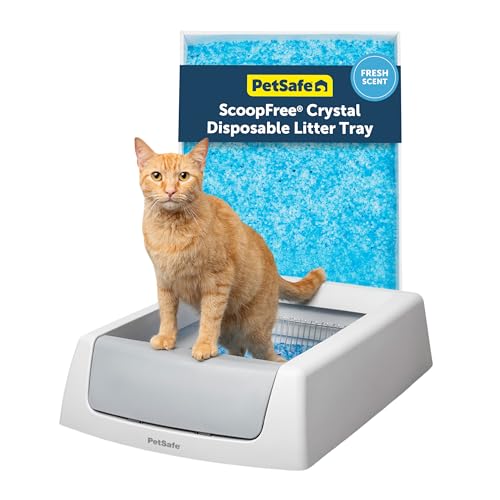
- Let the Box Do the Work - No scooping, cleaning or refilling your cat's litter box for weeks
- Unbeatable Odor Control - Crystal litter removes smell by absorbing urine and dehydrating solid waste. Includes one disposable ScoopFree Crystal litter tray with crystal litter
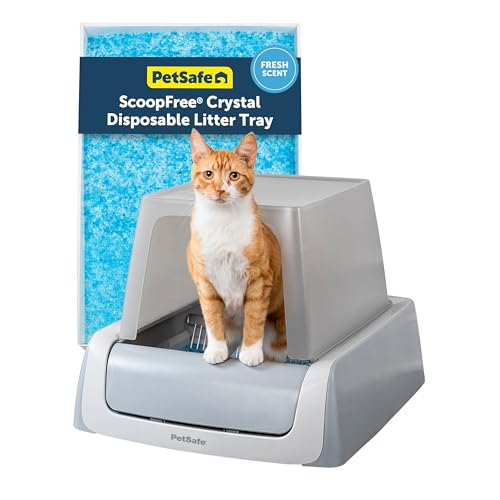
- Automatically Removes Waste: Enjoy weeks without scooping as the PetSafe Crystal Pro Legacy manages your cat's litter efficiently
- Unbeatable Odor Control: Crystal litter absorbs urine and dries solid waste; includes a
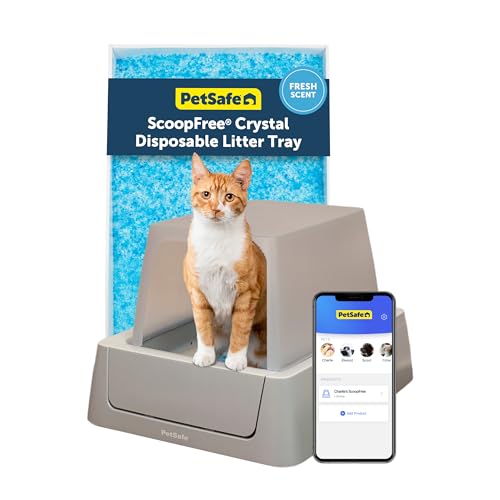
- App-Connected Convenience: Monitor your cat’s health from anywhere using the My PetSafe app with the ScoopFree automatic litter box, which requires a 2.4 GHz WiFi connection for
- Auto-Cleaning System: Hands-free cleaning cycle activates 20 minutes after use; simply replace the litter tray monthly for optimal performance
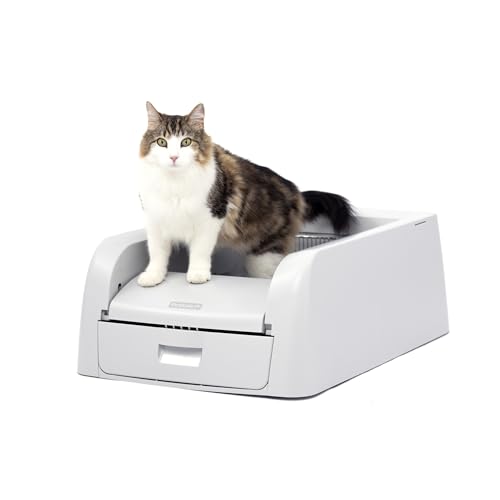
- Automatically Removes Waste: This automatic litter box rakes through your cat’s favorite clumping litter, locking away clumps and odors
- Compatible with Clumping Litter: Works with clumping litter and most other types; no trays needed for this versatile litter solution
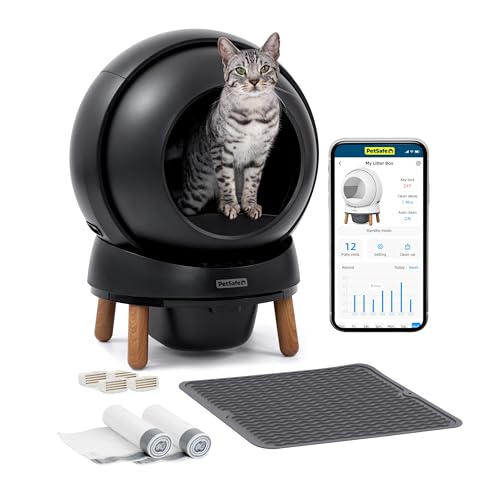
- Complete Automatic Litter System: The bundle features the PetSafe SmartSpin Litter Box, Litter Mat, 50 Waste Bin Liners, and 4 Deodorizers for convenience
- Hands-Free Cleaning: Enjoy up to two weeks without scooping; SmartSpin sifts clumps into a sealed waste drawer, offering superior odor control
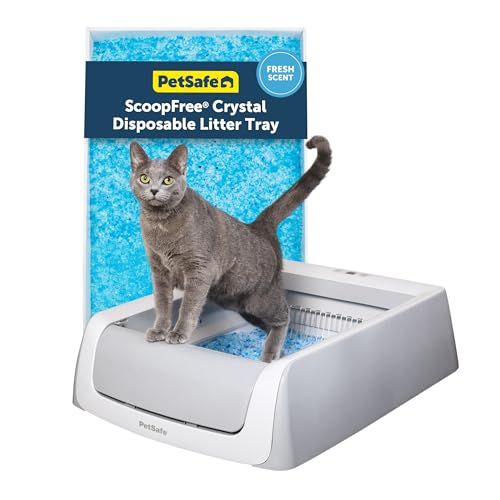
- Automatically Removes Waste: Enjoy weeks without scooping as the PetSafe Crystal Pro Legacy manages your cat's litter efficiently
- Unbeatable Odor Control: Crystal litter absorbs urine and dries solid waste; includes a
What "ScoopFree" actually means
There are two different mechanical philosophies sold under one brand name, and confusing them is the single most common buying mistake.
The crystal models (Classic, Crystal Pro Legacy, Crystal Smart) use a sealed disposable tray pre-filled with ScoopFree crystal litter. A rake sweeps waste into a covered compartment at one end. When the tray is spent, you pull the whole thing out, snap on the included lid, and bin it. You are not cleaning anything — you're replacing a cartridge.
Finding the right petsafe scoopfree self cleaning litter box review comes down to matching the features to how you will actually use it.
The clumping model rakes through ordinary clumping litter into a waste bin. No trays. You empty the bin weekly and top up the litter.
The SmartSpin is a third design entirely: it rotates to sift clumps into a sealed waste drawer, rather than raking across a flat bed.
Same brand, three genuinely different ownership experiences and three different long-term cost structures.
Anything marked "Not stated" isn't published in the listing data available here — confirm it on the product page before you commit.
Who the crystal ScoopFree is for
You're a good candidate if:
- You want the litter box to stop being a chore, full stop. The disposable-tray design means you don't scoop, you don't wash a pan, you don't handle wet litter. PetSafe's claim is weeks between changes.
- Dust and tracking bother you. All three crystal models advertise 99% dust-free, low-tracking crystals that don't stick to paws. If you've been sweeping a grey halo around a clay box, this is the specific problem crystal litter is sold to solve.
- Your floors are carpet or hardwood you care about. The disposable trays have a plastic lining specifically for leak protection.
- You travel or work long days. The Crystal Pro Legacy models include a health counter with motion sensors that tracks usage — useful baseline data on a cat you're not watching all day.
- You want remote visibility. The PetSafe ScoopFree Crystal Smart Self-Cleaning Litter Box, Front-Entry at $185.58 adds the My PetSafe app, activity tracking, irregularity alerts, and reminders to reorder trays. Its cleaning cycle fires 20 minutes after use.
Who should skip it
- Cats with a strong texture preference. Crystal litter feels nothing like clay or pine. If your cat is fussy about substrate, a box that only works with one proprietary litter is a gamble on a $99–$230 purchase.
- Anyone unwilling to buy consumables indefinitely. The crystal models depend on replacement trays — the Crystal Smart listing specifies monthly replacement. That's a recurring line item, not a one-time cost. Price out a year of trays before you decide.
- Very large or very small cats. Only the SmartSpin bundle publishes a weight figure (up to 25 lbs). For the rake-based crystal boxes, no dimensions or weight limits are stated here, so measure your cat and check the listing.
- Households where the box lives in a bedroom. These are motorized units with a rake cycle. No noise specs are published for any model.
- Anyone without 2.4 GHz WiFi. The Crystal Smart and SmartSpin both explicitly require it. A 5 GHz-only network will not do.
The honest trade-offs
Cheap box, expensive habit. The $99.00 Crystal Classic is by far the lowest barrier to entry, but the disposable-tray model shifts cost from the hardware to the refills. The $223.99 PetSafe ScoopFree Clumping Self-Cleaning Litter Box costs more than twice as much up front and needs no trays at all, working with clumping litter and most other types. Over two or three years the ranking on total cost can invert. Do that arithmetic before you anchor on the sticker price.
Covered vs. uncovered is a cat decision, not a human one. The Crystal Pro Legacy comes in an uncovered version at $142.49 and a front-entry version at $229.95 — an $87 gap for what is essentially an enclosure and entry style. Front-entry contains scatter better; some cats refuse enclosed boxes outright. If you don't already know which your cat tolerates, the uncovered one is the safer bet.
App features are genuinely useful or completely irrelevant, with no middle ground. Health tracking that flags irregular litter box activity is real early-warning value for urinary issues, which is a common and expensive feline problem. If you're going to open the app, it's worth the premium. If you're not, the on-unit health counter in the Pro Legacy models gives you a usage count without any subscription-shaped commitment.
Automatic boxes are not maintenance-free. They're maintenance-reduced. The clumping model still wants the waste bin emptied weekly and the litter periodically refreshed. Anyone selling you "never touch it again" is overselling.
What to check on the listing before you buy
Listings change constantly, so verify these yourself rather than trusting any review — including this one:
- Current price. Every figure here is a snapshot. PetSafe models move around a lot, and the gap between the Crystal Classic and the Crystal Pro Legacy can narrow to the point where the upgrade is obvious.
- Which exact variant is in the cart. "Crystal Pro Legacy" alone is ambiguous — uncovered and front-entry are different products at different prices. Check the ASIN and the photo, not just the name.
- What's actually in the box. Only the PetSafe ScoopFree SmartSpin Self-Cleaning Litter Box Bundle, Black is listed as a bundle, including the litter mat, 50 waste bin liners, and 4 deodorizers. The crystal models include one disposable tray with litter; plan on ordering more.
- Warranty terms. Not stated in the data here. These are motorized appliances with moving parts — find the coverage length on the listing or PetSafe's site before purchase.
- Replacement tray availability and price. If trays are out of stock or have crept up in price, that changes the whole ownership calculation.
- Read the owner reviews yourself, particularly the recent ones and the one- and two-star ones. Filter to your cat's size and your litter type. Nobody can summarize that for you honestly — go look.
Consider instead if…
PetSafe ScoopFree Clumping Self-Cleaning Litter Box — consider instead if…
…your cat is already committed to clumping litter and you have no interest in switching. At $223.99, the PetSafe ScoopFree Clumping Self-Cleaning Litter Box rakes through your cat's existing clumping litter, locks clumps into a waste bin, and needs no trays at all. PetSafe positions it for single or multi-cat homes. Fill it, leave it, empty the bin weekly.
PetSafe ScoopFree SmartSpin Self-Cleaning Litter Box Bundle, Black — consider instead if…
…you want the whole setup in one purchase and a bigger cat. The PetSafe ScoopFree SmartSpin Self-Cleaning Litter Box Bundle, Black at $354.99 sifts clumps into a sealed waste drawer rather than raking, sits just 12 inches from the ground for easier entry, accommodates cats up to 25 lbs, and works with any litter (clay clumping recommended). The Pet Companion app reports weight and litter habits in real time. Multi-cat supported; up to two weeks between scoops.
PetSafe ScoopFree Crystal Pro Legacy Front-Entry Self-Cleaning Litter Box — consider instead if…
…you want crystal litter's odor control but need better scatter containment. The PetSafe ScoopFree Crystal Pro Legacy Front-Entry Self-Cleaning Litter Box at $229.95 is the enclosed take on the Pro Legacy, with the same automatic waste removal, motion-sensor health counter, leak-protected disposable trays, and 99% dust-free crystals.
PetSafe ScoopFree Crystal Pro Legacy Self-Cleaning Litter Box, Uncovered — consider instead if…
…your cat won't use an enclosed box. At $142.49, the PetSafe ScoopFree Crystal Pro Legacy Self-Cleaning Litter Box, Uncovered gives you the Pro Legacy's health counter and crystal-tray system in an open design — the middle option between the $99.00 Classic and the front-entry version.
FAQ
How often do I need to replace the crystal tray? The Crystal Smart listing specifies monthly tray replacement. The Classic and Pro Legacy models are described as going "weeks" without scooping, cleaning, or refilling, without a fixed interval. Real-world frequency depends on how many cats use the box, so budget for more trays than the marketing implies.
Do any of these work with regular clay litter? The clumping model works with clumping litter and most other types, and the SmartSpin works with any litter with clay clumping recommended. The crystal models — Classic, Crystal Pro Legacy, and Crystal Smart — are built around ScoopFree crystal trays.
Is the app required to use the box? The Crystal Smart and SmartSpin both list 2.4 GHz WiFi as a requirement for app connectivity specifically. The Pro Legacy models track usage with an on-unit health counter and motion sensors instead of an app. The Crystal Classic doesn't list health tracking at all.
Which one is right for a multi-cat house? PetSafe explicitly names multi-cat households for the clumping model and the SmartSpin bundle. The crystal models don't state a cat limit, which is worth asking about on the listing before buying if you have three or more.
Related guides
- Best Cat Condos for Multiple Cats and Big Cats
- Best Options for Best dog and cat supplies - dog crates, cat trees, dog beds, litter boxes, pet kennels and cat condos
- Best dog and cat supplies - dog crates, cat trees, dog beds, litter boxes, pet kennels and cat condos for Families
Key Takeaways
- Choosing the right petsafe scoopfree self cleaning litter box review means matching the key features to your specific needs and budget
- Read real customer reviews and check the return policy before you commit
- Compare value across models — the priciest option is not always the best fit